
News and Insights
-
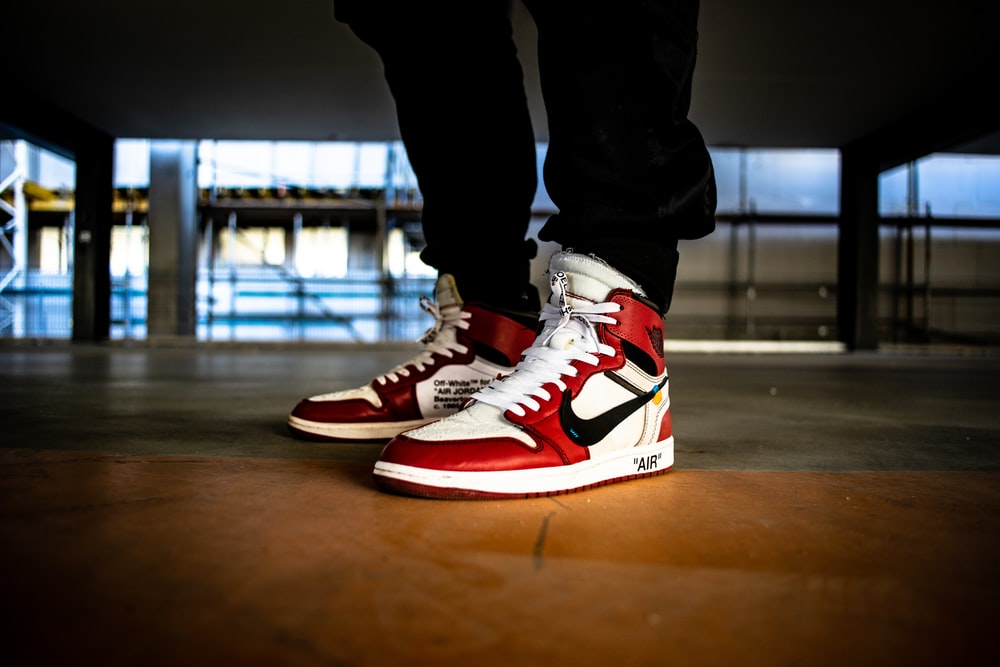 Nike x Virgil Abloh, Air Jordan one. Part of “The Ten” collaboration. Paul Volkmer, copyright Unsplash
The New Luxury
The luxury retail landscape has been radically transformed in the past decade. After a period of democratisation and diffusion lines in the 90s and 00s, brands turned to catering to an increasingly diverse, discerning and younger customer at the turn of the millennium. Luxury brands are now just as likely to show a resort collection in Shanghai as they are to drop a limited-edition sneaker in collaboration with Virgil Abloh. This is the new luxury.
Over the past ten years, global brands such as Chanel, Louis Vuitton, Hermès and Gucci have all shifted their strategy to become more relevant, dynamic and inclusive than ever before. Shows are live-streamed, designers have public social media profiles and brands are opening their doors to give a “behind the scenes” view of what it really takes to create a luxury brand. Both LVMH and Kering have led the way in bringing the customer closer to the brand with initiatives such as Les Journees Particulieres, where customers can experience first-hand how watches, handbags or champagne are made. Gone are the days where luxury was opaque and mystery filled.
At the heart of this sits the new luxury shopper. He is in his mid-20s, lives in Chengdu and has likely bought at least one item of clothing for $500 or more in 2019. He likely travels at least every quarter and likes to shop in stores. Rest assured, he uses social media to educate himself about trends, brands and the value proposition of both traditional and new luxury brands. He is interested in Gucci, yes, but he is equally keen on Nike. He probably shops at T-mall but only when he has checked the price of a particular sneaker on Stock X. Value for money is a serious consideration too, and while money may not always be an object he still wants to buy something at a fair price. He also shops with a conscience. He wants to know how, where and by whom are products made and he wears the sustainability of a brand as a badge of honour.
While it may be surprising to some, one of the biggest shifts in luxury since the 90s has been the rise and rise of menswear as a category. Womenswear and women’s accessories are still king for many brands, but as many reach a point of saturation, they are now turning to the menswear market, widely perceived to be a growth driver, particularly in Asia. As with womenswear, accessories are now driving this market. Sneakers, watches, leather goods and grooming products are all producing double and even triple-digit growth sales for brands as diverse as Balenciaga, Rolex, Adidas and Estee Lauder Group. Once again, the consumer is dictating the pace and level of change as their attitude to dressing, grooming and status has evolved. Millennials and Gen Z are after all, ditching the formal suit in favour of the uniform-of-choice for the creative types worldwide: sneakers, unstructured jacket and jeans.
Another seismic change in the luxury industry has happened online. As a whole, the industry has perhaps been slower than others to embrace e-commerce but even this has changed vastly over the past year alone. Richemont bought Yoox-Net-A-Porter back into its group back in 2018 partly to capture a larger part of online luxury sales globally and partly to leverage their expertise as a technology platform to arm other brands within their portfolio with the necessary ammunition to grow their online flagship stores and increase e-commerce market share for their stable of brands. Less than a year ago, Kering announced they would end their partnership with YNAP and take back control of web operations of many of its group houses. Chanel, who once vowed not to sell anything online has since launched its own beauty store online as well as launching leather goods and watched online via exclusive partnerships.
The rise of e-commerce and ever-changing consumer demands have changed the luxury retail landscape beyond recognition. These macro-changes have already had a substantial impact on brands’ distribution strategies too. Many have significantly overhauled their wholesale strategies, rationalising their portfolio all the while creating deeper, more meaningful relationships with partners that appeal to the Gen Z and Millennial customer. The Selfridges Group, Farfetch and Alibaba are some of the biggest winners. The retail distribution is still evolving, but it is clear that flagships now come in all sizes, offer a hyper-personalised service and are seen as meeting points, or to quote Apple, “Town Halls”, where consumers can do much more than engage with the brand. They can meet like-minded individuals, educate themselves and enjoy money-can’t-buy experiences. This is the new luxury.
New luxury brands have become extremely relevant in the retail real estate landscape as they approach opening physical stores as an extension of their online presence – leveraging data gathered online to choose a specific location. The arrival of such brands is particularly apparent in gateway cities in which Chelsfield operates in, e.g. London, Paris, New York and Tokyo. As brands choose locations on the edge of traditional retail hotspots – think NoLita instead of Soho in New York or the Marais instead of Saint Germain in Paris – these brands are blurring the lines between established and emerging neighbourhoods, becoming instrumental in the creation of distinct tenant mix strategies in the process. Our approach is therefore to build meaningful relationships with these brands to understand their ever-changing requirements and to create bestin-class developments that can attract this new wave of retailers.